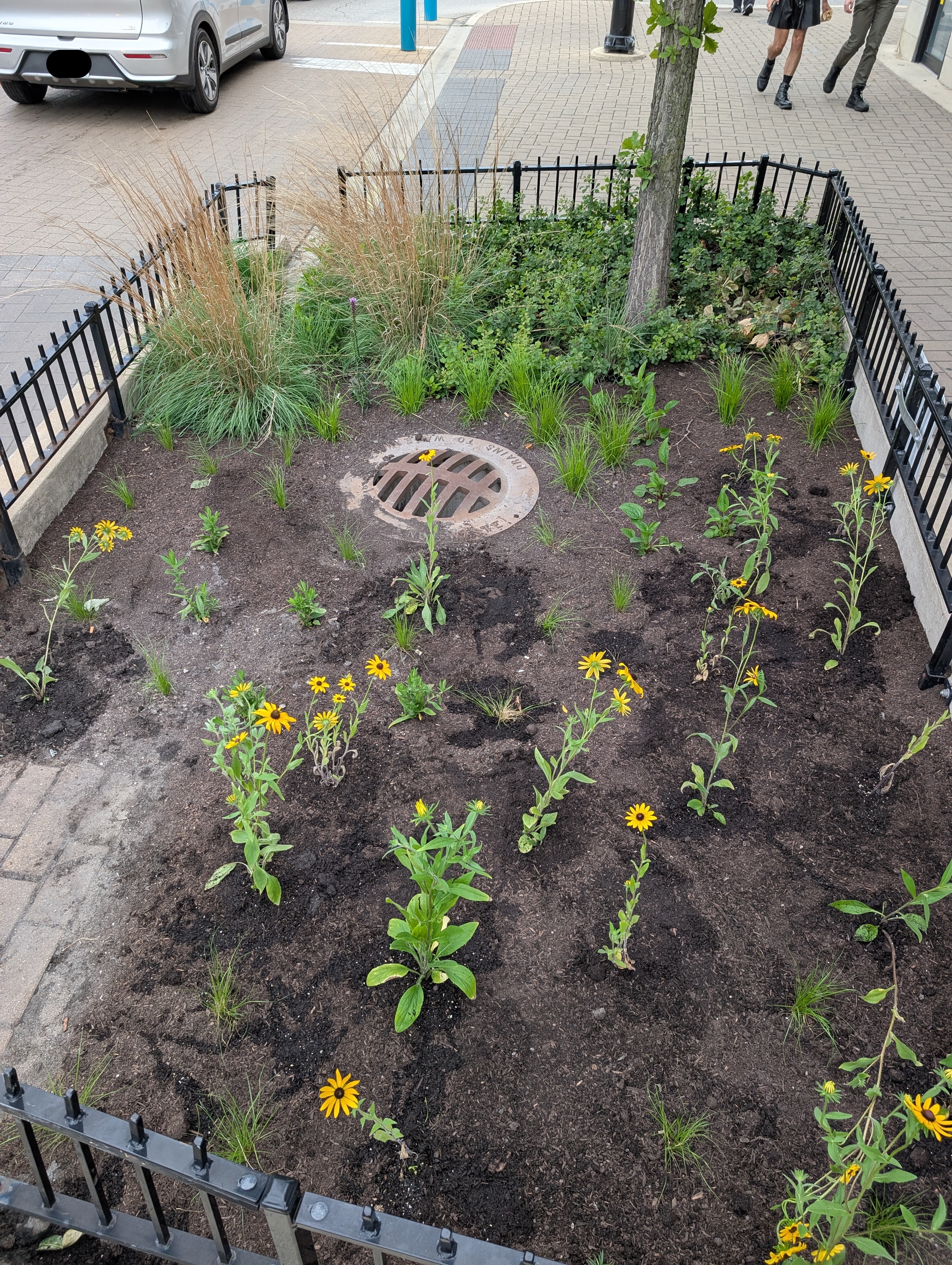
in early spring 2026, i was chatting with Ellen Duong, owner of Qideas on Argyle, about some native planting i was getting ready for. she excitedly shared with me that Qideas and their neighbor coffee shop, Haibayô, steward the two bioswales on the corners of argyle and broadway, and asked if i would like to do the planting this year.
i agreed, equally excited, and decided to write up the story!
this work is important to me, since it has massive, lasting effects. as our climate changes and we experience more extreme weather events, and as our cities water management systems are placed under unprecedented strain, refining our approach to plants-as-infrastructure now is critical. this project has so many benefits, including:
here's a quick list of plants we installed:
to start, we had a few tasks:
this was by far the most time consuming, with our vision and design taking about a month of continuous work. i partnered with my roommate, a landscape architect, to combine my ecosystem experience with his planning and design experience.
the goal was easy: install as many new, species native, harsh-environment-tolerant plants as we could within the budget, balancing between function and beauty.
the condition check was quick, and involved noting what species were present early in the season. the most notable species was Rhus aromatica, fragrant sumac, which had established in corners of both the north and the south bioswales. R. aromatica is native to the region, but these particular individuals were quite low-growing, so we suspect they might be cultivars. Since they were well established, we left them in place.
it was clear that there were also some other intentional plantings in each bed, but it was unclear what they were. given that our goal was to add new plants, we decided to continue to observe the existing plantings as we worked.
we identified a good amount of free space that was prime for new plantings. the substrate quality seemed okay for our purposes; it wasn't particularly fantastic, but it had a good amount of organic matter and was easy to work in. a few areas had accumulated some mud, but this was not concerning.
selecting species for bioswales requires more attention than an average planting. not only did we have to think about the standard variables like light level, soil quality, and wetness, we also had to consider the bioswale-specific factors including high salt inundation, frequent washout events, exposure to elevated levels of environmental contaminants, inconsistent soil quality, and more. thankfully, we weren't the first people to plant natives in a bioswale. Pizzo Nursery has a great write-up on the topic, best bioswale plants for municipal stormwater management, which was a great starting point. they focus on salt tolerance, since this tends to be the biggest factor in plant success.
we chose two heavy-hitters to provide filtration and improve water inundation: Sporobolus heterolepis (prairie drop seed) and Carex vulpinoidea (brown fox sedge). for increased beauty and visual interest, we chose Echinacea purpurea (purple coneflower), Rudbeckia hirta (black-eyed susan), and Symphyotrichum novae-angliae (new england aster) for a nice purple and yellow palette that's guaranteed to be a hit amongst locals and pollinators alike.
with our goal to add native plants, we needed a vision to really make the plantings pop. thankfully, my roommate already has an extensive background in landscape architecture, so the vision came naturally: create bioswales that are both functional and beautiful, to show the neighborhood and the city that native plants are critical for the health, safety, and beauty of Chicago.
when selecting our plant species, our vision was already taking shape. not only did we consider the function of the plants, but also their growth habit. would they be tall? short? bright? subtle? fragrant? messy? spindly? colorful? intriguing? we didn't want to create a bed of only grasses, as important as they are, but we also had to contend with the fact that many of our native prairie plants can get quite huge, often exceeding 6 feet when flowering, which could come across as too chaotic.
we decided to stick to short and medium height plants, with the largest capping out around 4 feet tall under ideal conditions.
after coordinating with Ellen, we gathered on saturday, june 19, 2026 to plant the:
we planted the Rudbeckia hirta (black-eyed susan) x 24!